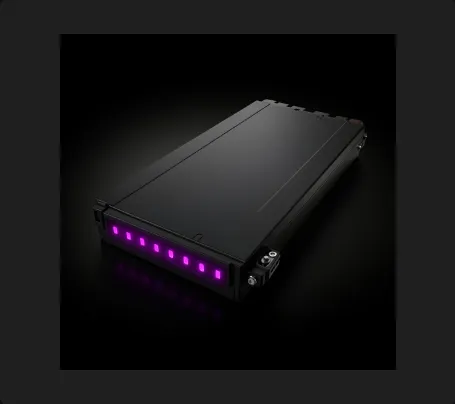
Ideal for 2–3 BHK Indian homes, small clinics, retail shops, and solar-paired backup systems running on a 1.5–2 kVA inverter. If you're replacing two 150Ah tubular batteries, this is the direct upgrade.
Applications
Home backup
6–8 hours of typical home load (lights, fans, TV, Wi-Fi, fridge cycling) on a single charge.
Solar storage
Pairs with 1–3 kW rooftop solar inverters to store daytime generation for evening use.
Small commercial UPS
Reliable backup for billing systems, POS terminals, and small office loads.
Telecom edge sites
Compact backup for small cell sites and broadband distribution points.
Why lithium over lead-acid?
A single Athena 25.6V 100Ah pack outlives 4–6 tubular battery replacements over 10 years, weighs 60% less, requires zero maintenance, and is 95% efficient versus ~75% for lead-acid. On a per-kWh-delivered basis it's roughly 40% cheaper over its life.
Over-voltage, under-voltage, over-current, short circuit, thermal runaway prevention.
Cell-Level Balancing
Active balancing keeps every cell uniform — extends real-world pack life.
Thermal Cutoffs
Over-temperature and under-temperature cutoffs to keep cells in their safe operating window.
Frequently Asked Questions
Will this work with my Luminous / Microtek / V-Guard inverter?
Yes — set the inverter to “tubular” or “lithium” mode (29.2V charge cutoff). We provide free setup guidance with every purchase.
How much backup will it give my home?
A typical 2 BHK load (~250–300W continuous) runs 6–8 hours. Add an AC and that drops to ~45 minutes.
Can I parallel two units for more capacity?
Yes — up to 4 packs in parallel, doubling capacity to 400Ah / 10.24 kWh.
Helpful Reading
Buyer Guide
Best Battery for Inverter in India (2026 Buyer's Guide)
A practical buyer's guide for choosing the right inverter battery in India — backup time, lifetime cost, and lithium vs lead-acid compared head to head.
Technical
What is a 12.8V 100Ah Lithium Battery? Full Guide
Everything you need to know about a 12.8V 100Ah LiFePO4 battery — what the numbers mean, real-world backup calculation, and who it suits.
Who should buy this?
Ideal for 2–3 BHK Indian homes, small clinics, retail shops, and solar-paired backup systems running on a 1.5–2 kVA inverter. If you're replacing two 150Ah tubular batteries, this is the direct upgrade.
Applications
Home backup
6–8 hours of typical home load (lights, fans, TV, Wi-Fi, fridge cycling) on a single charge.
Solar storage
Pairs with 1–3 kW rooftop solar inverters to store daytime generation for evening use.
Small commercial UPS
Reliable backup for billing systems, POS terminals, and small office loads.
Telecom edge sites
Compact backup for small cell sites and broadband distribution points.
Why lithium over lead-acid?
A single Athena 25.6V 100Ah pack outlives 4–6 tubular battery replacements over 10 years, weighs 60% less, requires zero maintenance, and is 95% efficient versus ~75% for lead-acid. On a per-kWh-delivered basis it's roughly 40% cheaper over its life.
Over-voltage, under-voltage, over-current, short circuit, thermal runaway prevention.
Cell-Level Balancing
Active balancing keeps every cell uniform — extends real-world pack life.
Thermal Cutoffs
Over-temperature and under-temperature cutoffs to keep cells in their safe operating window.
Frequently Asked Questions
Will this work with my Luminous / Microtek / V-Guard inverter?
Yes — set the inverter to “tubular” or “lithium” mode (29.2V charge cutoff). We provide free setup guidance with every purchase.
How much backup will it give my home?
A typical 2 BHK load (~250–300W continuous) runs 6–8 hours. Add an AC and that drops to ~45 minutes.
Can I parallel two units for more capacity?
Yes — up to 4 packs in parallel, doubling capacity to 400Ah / 10.24 kWh.
Helpful Reading
Buyer Guide
Best Battery for Inverter in India (2026 Buyer's Guide)
A practical buyer's guide for choosing the right inverter battery in India — backup time, lifetime cost, and lithium vs lead-acid compared head to head.
Technical
What is a 12.8V 100Ah Lithium Battery? Full Guide
Everything you need to know about a 12.8V 100Ah LiFePO4 battery — what the numbers mean, real-world backup calculation, and who it suits.